Residential rodent exclusion treats mouse and rat pressure as a structural engineering vulnerability rather than an endless poisoning cycle. Standard rodent baiting temporarily decreases local populations, but vacant…
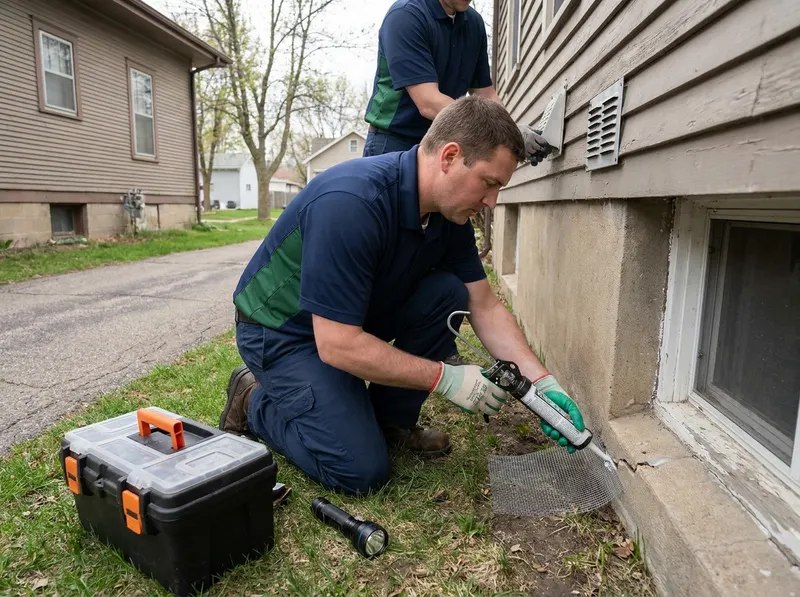
Residential rodent exclusion treats mouse and rat pressure as a structural engineering vulnerability rather than an endless poisoning cycle. Standard rodent baiting temporarily decreases local populations, but vacant scent trails consistently draw new field mice into heated living quarters once autumn temperatures drop below freezing. True exclusion creates an impenetrable barrier: exterior penetrations measuring 0.25 inches or larger are reinforced with rust-resistant galvanized steel wire, heavy mortar compounds, and architectural sealants that rodents cannot chew through. When a home suffers from active attic activity, relying strictly on snap traps removes resident mice without preventing new colonies from entering through roof returns, while perimeter bait stations alone leave interior sheetrock vulnerable to costly wire chewing and urine contamination. The deliberate trade-off of full physical exclusion is higher upfront labor and diagnostic time, which eliminates the recurring seasonal cost and domestic odor risks associated with poisoned rodents dying within closed drywall partitions.
Aberdeen residential properties face aggressive seasonal rodent migrations driven by regional agricultural cycles and harsh northern winters. In neighborhoods adjacent to open fields and drainage corridors, such as Prairiewood, Rolling Hills, and the Moccasin Creek district, ambient rodent densities surge each October following grain harvesting across rural Brown County. Homes in the Lincoln Park District and North Highland frequently feature fieldstone basements or aged wooden sill plates where mortar degradation creates subtle runnels at the ground line. Closer to the Northern State University Area and Melgaard Park Area, mature trees provide overhanging branches that grant roof rats and squirrels direct highway access to unmeshed soffit vents and brick chimneys. In suburban builds near the Storybook Land Area, settled utility trenches around central air compressors and natural gas meters often leave 1-inch voids directly into the rim joist.
The exclusion implementation follows three measured phases to secure structural perimeters against high-pressure intrusions:
1. Technicians conduct a 360-degree perimeter audit, documenting utility line gaps, deteriorated garage door bottom sweeps, degraded weatherstripping, and unprotected crawl space louver vents.
2. Workers pack architectural voids with industrial copper mesh and mechanically fasten 0.25-inch galvanized hardware cloth over crawlspace vents, soffits, and gable louvers using self-tapping masonry fasteners.
3. Technicians seal all perimeter joints with non-shrink elastomeric compounds to eliminate outward air currents that attract foraging rodents, concluding with interior capture trapping to remove animals already trapped inside the newly sealed perimeter.
Every job gets a firm, written price after a free on-site visit.
Tell us about your residential rodent exclusion job in Aberdeen and we'll send a clear, written quote, usually the same day.
 Kelvoro Pest Management